
Surging e-commerce, tighter delivery windows, and a chronic shortage of dock labor have made the truck unloader conveyor a strategic asset in modern logistics. More than a moving belt, it is the first touchpoint where material flow, operator safety, and data capture converge. Whether you’re emptying loose-loaded parcels, floor-stacked cartons, or mixed SKUs at a distribution center, a well-specified unloader reduces dwell time, cuts ergonomic risk, and stabilizes throughput during volatile peaks. Below, explore how the technology works, which features drive performance, and how leading warehouses and cross-border operations deploy unloaders to gain a measurable edge.
What a Truck Unloader Conveyor Does—and Why It Matters Now
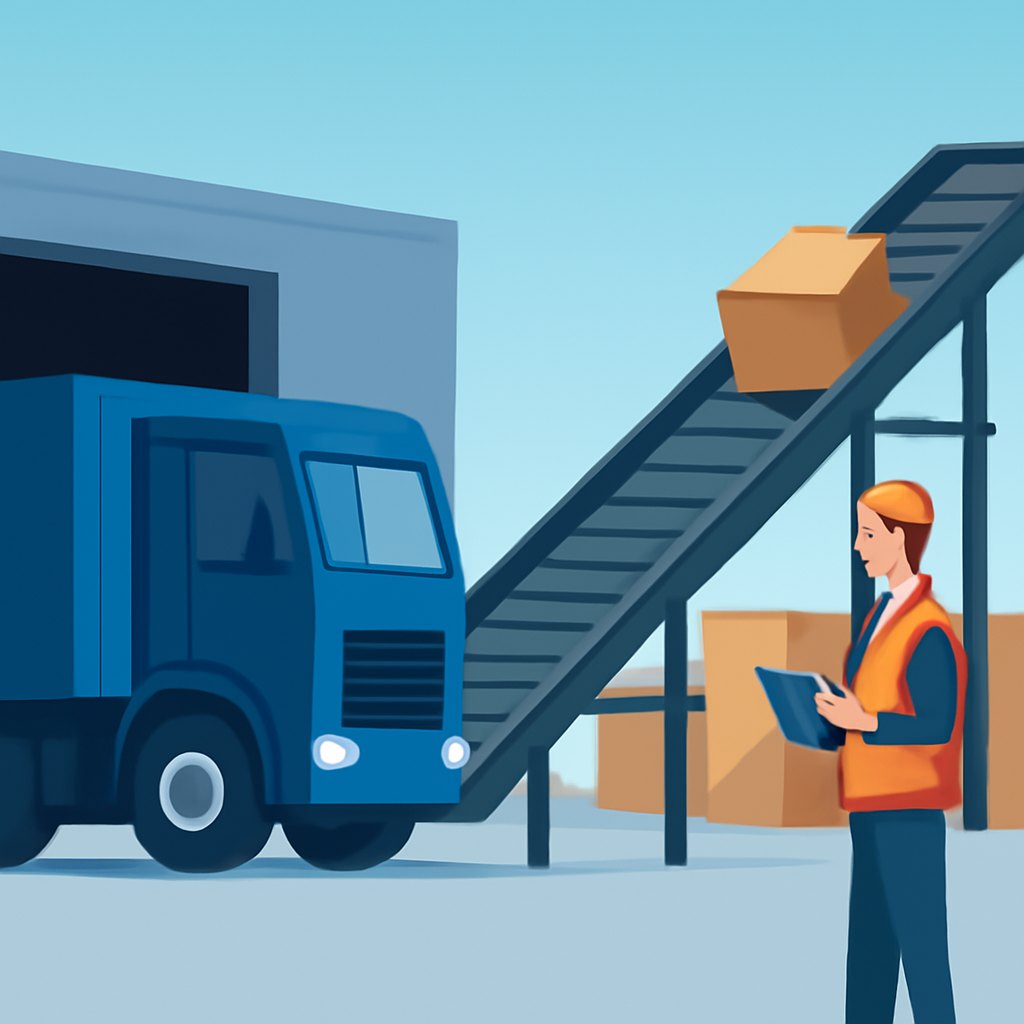
At its core, a truck unloader conveyor bridges the gap between a trailer and the facility’s internal conveyor or staging zone. It enters, reaches, or aligns at the trailer opening, presenting a powered or gravity-assisted path so cartons, parcels, or bulk bags can be conveyed out smoothly. In practice, that simple task solves multiple bottlenecks: it eliminates excessive walking and lifting, limits staging congestion at the dock, and converts unpredictable, labor-heavy unloading into a steady, controllable flow. With peak season surges and same-day expectations, this steadiness is invaluable.
There are several archetypes. Telescopic belt conveyors extend deep into trailers via one or more boom stages, often with adjustable elevation to meet varying floor heights. Flexible powered roller conveyors bend and snake to follow the trailer wall, useful when loads shift. Dockless mobile belt conveyors roll up to the tail of a truck and hand off to in-warehouse conveyors or totes. For high-volume parcel hubs, integrated systems pair a telescopic truck unloader conveyor with scanners, dimensioning modules, and sortation to keep labels up and data flowing as soon as cartons appear at the dock.
Performance is visible in hard numbers. Unassisted manual unloading might manage 300–500 cartons per hour with significant ergonomic strain. Introduce a telescopic unloader with variable speed controls, and rates often jump to 800–1,500 parcels per hour, depending on carton size and workforce experience. The conveyor’s moving surface brings product to the worker rather than requiring constant stepping and twisting, slashing fatigue and repetitive motion risk. Emergency-stop lines along the boom, dead-man controls, guarded pinch points, and traction-optimized belt surfaces further protect crews while encouraging consistent pace.
Beyond the belt, the unloader’s value is amplified when it connects to upstream data. Mounting scanners at the boom tip allows instant capture of barcodes as cases leave the trailer, building receiving visibility while loads are still at the dock. With returns and cross-border imports accelerating in hubs across Asia and beyond, early data capture streamlines customs checks, quarantine processes, and inventory putaway. For an overview of modern options tuned to e-commerce, express, and industrial settings, see this curated range of truck unloader conveyor solutions.
Features, Configurations, and Specs That Determine Performance
Selecting the right configuration starts with the freight profile. For loose-loaded parcels and floor-stacked cartons, telescopic belt units shine, thanks to their reach and ergonomic pitch control. For mixed-case receiving where case bottoms vary, a hybrid design—belt in, roller out—can minimize friction. If your dock layout changes frequently or you share gates with carriers, mobile unloaders on heavy-duty casters preserve flexibility without permanent pits or bolt-downs.
Key specifications drive results. Boom reach typically ranges from 7 to 18 meters, with two or three telescoping stages covering most 53-foot trailers. Belt widths of 600 to 1,000 millimeters accommodate standard carton footprints; wider belts reduce fall-offs but increase power draw and space. Load rating is expressed in kilograms per linear meter; match this to your heaviest expected flow and include a safety margin for clustered cartons. Variable frequency drives (VFDs) enable soft starts, precise speed tuning, and energy savings, while robust gearmotors and sealed bearings cut maintenance in dusty or humid climates common in coastal logistics corridors.
Ergonomics separate good from great. An articulating “nose” section that tilts up or down lets operators keep the handoff height in the neutral power zone, protecting shoulders and backs. Anti-slip grating at operator platforms, integrated LED task lighting inside dark trailers, and fingertip controls along the boom reduce error and fatigue. Safety should be engineered in, not bolted on: continuous emergency stop lines, audible alarms during boom movement, and light curtains at pinch zones all contribute to a safer dock.
Integration is where the unloader becomes a smart asset. Consider mounting scanners, printers for cross-docking labels, or dimensioning units at the tip to tie directly into the WMS. This shifts “receive and identify” upstream, smoothing putaway and sortation. For facilities in regions with variable voltage or grid constraints, energy options matter: high-efficiency motors, regenerative braking on downslopes, and auto-idle modes trim kilowatt-hours without sacrificing throughput. Environmental factors also steer the spec—choose corrosion-resistant finishes for coastal air, ingress-protected electrics against moisture, and low-temperature belts for cold-chain. Finally, evaluate life-cycle cost: spares availability, local service coverage, and training programs for safe operation often outweigh a small upfront price delta, especially for 24/7 express hubs.
Real-World Use Cases, ROI Levers, and Implementation Best Practices
Consider a mid-size e-commerce fulfillment site near the Pearl River Delta receiving 30 inbound trailers daily. Before automation, each truck required four unloaders for roughly 75 minutes, producing bottlenecks and overtime. By deploying two telescopic unloaders and pairing them with flexible powered conveyors, the site cut average unload time by 35%, redeployed two heads per dock to value-added tasks, and reduced reported ergonomic incidents in the first quarter. With earlier barcode capture at the boom nose, inbound data hit the WMS 20 minutes sooner, allowing replenishment to start before the final pallets were staged. For cross-border parcels entering from nearby ports, this early visibility accelerated customs documentation and exception handling.
In a manufacturing receiving scenario, the same principles apply. Mixed cartons, components, and occasional bulk bags often arrive floor-loaded. A robust truck unloader conveyor with higher load ratings and cushioned stop bars handles weight variability, while integrated scales spot-check inbound weights to reconcile against purchase orders. In FMCG and 3PL operations where SKU mix changes daily, mobile unloaders protect agility—rolling to hot docks during peaks, then parking to free aisle space when volumes fall.
ROI springs from multiple levers: labor hour reductions per trailer, lower injury and claims costs, throughput gains that defer facility expansion, and inventory accuracy that reduces safety stock. A simple model includes baseline unload minutes per truck, crew size, hourly labor cost, incident rate and cost, and the capital/maintenance cost of the system. Many operations find payback within 9–18 months, faster in high-volume hubs. Energy savings from VFDs and auto-sleep add incremental value, particularly in humid, high-temperature climates where motors otherwise run hot.
Implementation begins with a dock study. Measure trailer mix (lengths, average fill patterns), floor levelness, door spacing, and available shore power. Map product flow from boom tip to final destination: Will cartons feed a takeaway conveyor, a gaylord station, or a sorter? Ensure adequate clearance for swing radius and boom articulation. During commissioning, train teams on pace-setting rather than sprinting; the goal is sustainable, ergonomic flow. Build maintenance into the rhythm: daily belt inspections, weekly lubrication, quarterly checks on telescopic stages, and annual motor diagnostics. Keep critical spares on-site—belts, rollers, contactors—especially for 24/6 operations. Finally, plan for growth: select modular systems with add-on stages, scanners, or auxiliary flexible conveyors so you can scale without reworking the dock.
Across express delivery networks, regional distribution centers, and cross-border gateways, the message is consistent: investing in a thoughtfully engineered truck unloader conveyor transforms the receiving dock from a variable, labor-heavy pinch point into a predictable, data-rich engine of throughput. When specified against real freight profiles and integrated with safety and visibility from the start, it delivers speed, protects teams, and sets the tone for every process downstream.

Born in the coastal city of Mombasa, Kenya, and now based out of Lisbon, Portugal, Aria Noorani is a globe-trotting wordsmith with a degree in Cultural Anthropology and a passion for turning complex ideas into compelling stories. Over the past decade she has reported on blockchain breakthroughs in Singapore, profiled zero-waste chefs in Berlin, live-blogged esports finals in Seoul, and reviewed hidden hiking trails across South America. When she’s not writing, you’ll find her roasting single-origin coffee, sketching street architecture, or learning the next language on her list (seven so far). Aria believes that curiosity is borderless—so every topic, from quantum computing to Zen gardening, deserves an engaging narrative that sparks readers’ imagination.